The Dale Dyke (Bradfield) Dam breach, the deadliest civil engineering disaster in Victorian England, killed several hundred residents near Sheffield, UK, in March 1864. By the mid-19th century, Sheffield was expanding rapidly. Its population was nearly 200,000, its iron and steel industry was booming, and its daily water consumption had quadrupled over the previous 30 years. In 1852, Parliament authorized the construction of a new reservoir for the growing city. The site chosen sat on the Dale Dyke, a tributary of the River Loxley, roughly 9 miles (14 km) west of Sheffield; it was shifted slightly upstream when slickensides that indicated historical landslides were observed in test excavations. The dam’s owner, Sheffield’s municipal water supply system, hired civil engineer Towlerton Leather to design the dam and reservoir. He had successfully designed several sizable local dams but was primarily a contractor by the 1850s [1, 2, 12].
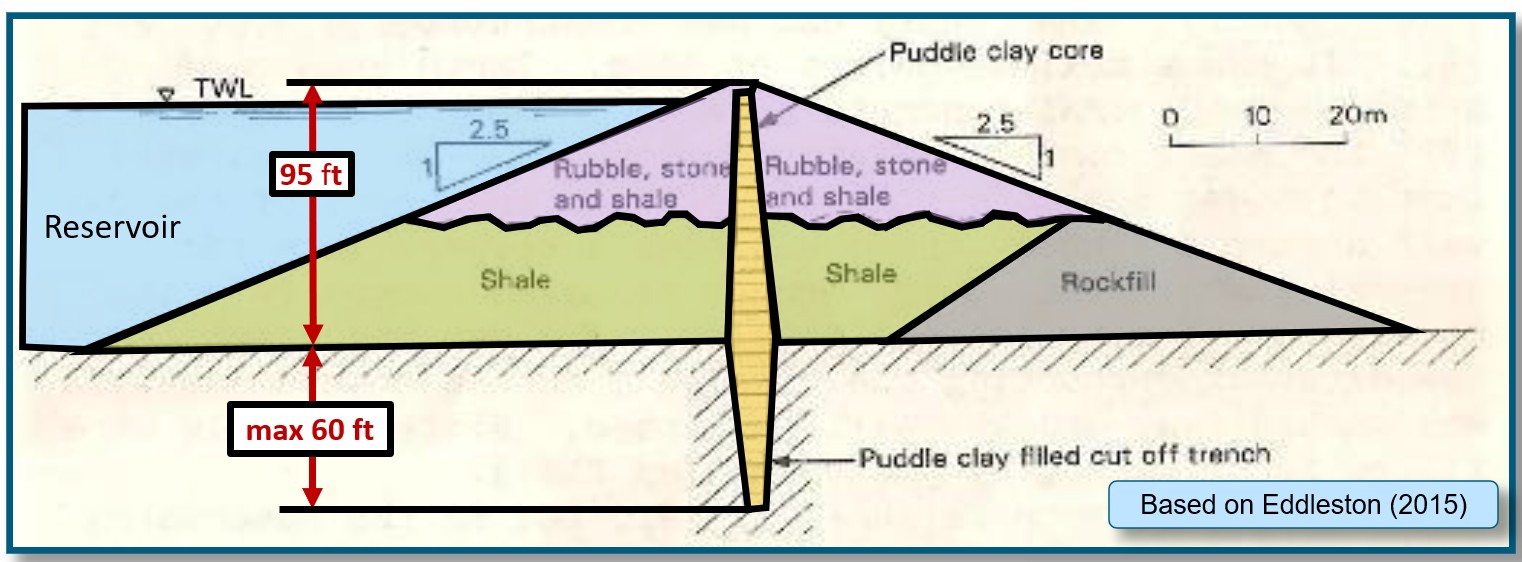
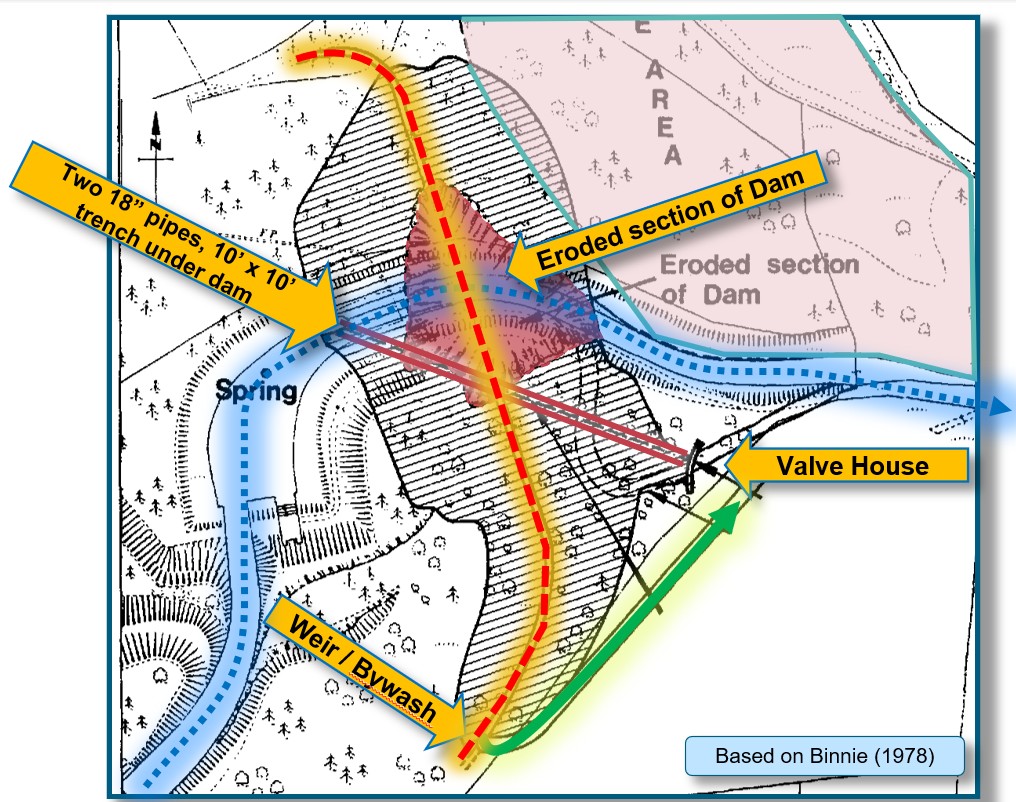
Leather’s plan for the Dale Dyke Dam was typical of early Victorian dam designs. The structure would impound roughly 2,200 acre-feet (2,700,000 m3) of water from a 6.7-square-mile (17 km2) drainage area. It would be 1,254 feet (382 m) long and 95 feet (29 m) tall, with a 490-foot (149 m) base tapering on face slopes of 2.5H:1V to a 12-foot (3.7 m) crest. A cutoff trench extending up to 60 feet (18 m) below the structure would prevent seepage through its base. The dam would have a core of puddled clay – material placed in wet, 6-inch (15 cm) layers and compacted for watertightness – tapering from 16 feet (4.9 m) wide at the bottom of the cutoff trench to 4 feet (1.2 m) wide at the crest. The dam’s shoulders would consist of locally sourced gravel, primarily shale, placed in 3-foot (0.9 m) lifts, and its downstream face would be buttressed by a stone toe 50 feet (15 m) high. While zoned embankment dams were becoming more common by the mid-1850s, Leather did not utilize this approach [1, 2, 6, 9].
To prevent overflow, Leather included a spillway along the dam’s right side 5 feet (1.5 m) below the crest and measuring 65 feet (20 m) long. He also included two 1.5-foot (0.5 m) cast iron, lead-sealed discharge pipes beneath the structure. The pipes, which would be encased in puddled clay and operated by valves on their downstream ends, could drain roughly 20,000 cubic feet (0.45 acre-ft or 565 m3) of water per minute out of the reservoir[WMJ1.1][MB1.2]. However, they could not be inspected during construction or operation of the dam. Also, their relatively limited capacity – even when combined with the spillway – meant that drawing down the reservoir would be a slow process [1, 2].
Construction of the Dale Dyke Dam began in 1859 under the supervision of civil engineer John Gunson, who had overseen several such projects. Gunson lived within a horseback ride of the site but visited only a few times during construction, leaving the work of day-to-day supervising to the inspector he retained. Under the inspector’s eye, most tasks went as planned, such as building a diversion channel to reroute the Dale Dyke during construction. Still, Gunson’s use of a single inspector may explain several deviations from common practice during construction. For instance, in one location, the cutoff trench was abruptly stepped 35 feet (11 m) to prevent seepage through a natural spring. This left part of the clay core founded on bedrock and an adjacent part founded on soil, creating a risk for differential settlement of the core as the trench was finished in 1861 [2, 3].

As embankment fill placement began in the fall of 1861, the contractor began clearly departing from Towlerton Leather’s design specifications. Most notably, Leather had called for the shoulder gravel to be placed in 3-foot (0.9-m) lifts, but the contracting crews instead used lifts up to 5 feet (1.5 m) thick. They placed the gravel by dumping it from railroad cars without any compaction, creating a high-permeability zone adjacent to the low-permeability core. As the core was built, the loose gravel also settled around it, creating arching within the puddled clay. Concerns about the dam’s stability began even before fill placement was finished in April 1863. One laborer recalled that during construction, “a large spring of water issued from the foot of the embankment where the breach [later] occurred, and was conveyed away by a drain.” Yet the design and construction teams were either unaware of or unconcerned by these issues. After crews lined the dam’s upstream face with heavy stone blocks, filling of the 78-acre (32-ha) reservoir began in June 1863. The project had cost roughly £35,000 at the time, or $7M in 2026 USD. Modern scholars using the Risk Assessment for Reservoir Safety Management, the UK’s current schematic for estimating dam failure probabilities, determined that the Dale Dyke Dam had an annual failure probability of about 0.3%, unacceptable for a high-hazard dam [1, 2, 3, 4, 7, 9, 11].
More signs of trouble at Dale Dyke Dam appeared early in 1864. A construction worker later told a reporter that in the weeks leading up to the failure, a portion of the upstream shoulder approximately 16 feet (5 m) below the crest began settling, with noticeable ensuing leakage. Two weeks of rain in late February and early March accelerated the reservoir’s first filling and almost certainly worsened these leaks. By Thursday, March 10th, water was about 2.25 feet (0.4 m) below the dam’s crest. When John Gunson, concerned by reports of high winds, visited the next day, additional storms had raised the water to just 1.25 feet (0.4 m) below the crest. Gunson’s visit left him reassured, but late that afternoon, a worker crossing the dam observed a longitudinal crack along the downstream shoulder 10 to 12 feet (3.0 to 3.7 m) below the crest. It expanded slowly but steadily and was 0.125 inches (0.3 cm) wide by 8 PM. Word of the crack slowly made its way down the valley through various messengers and eventually reached Gunson [1, 2].
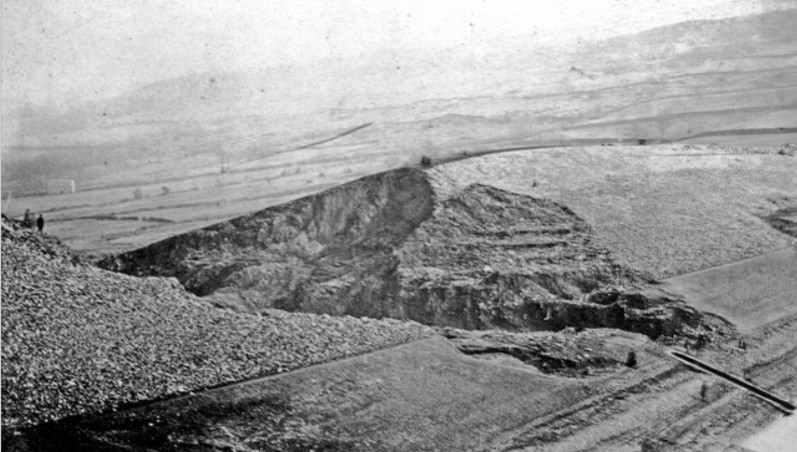
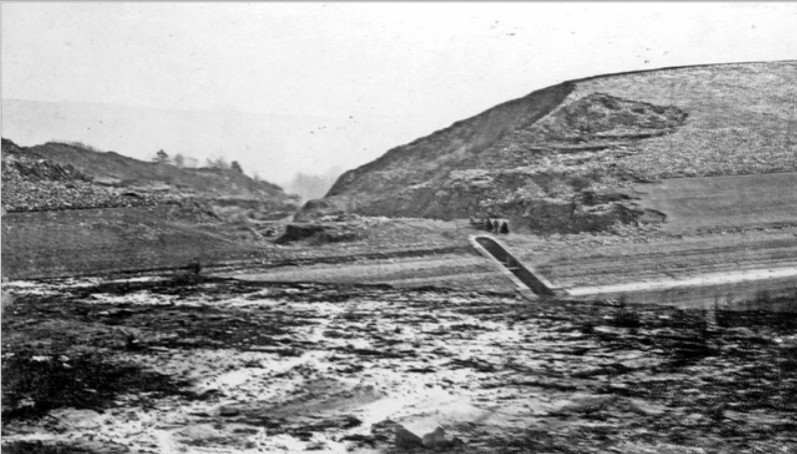
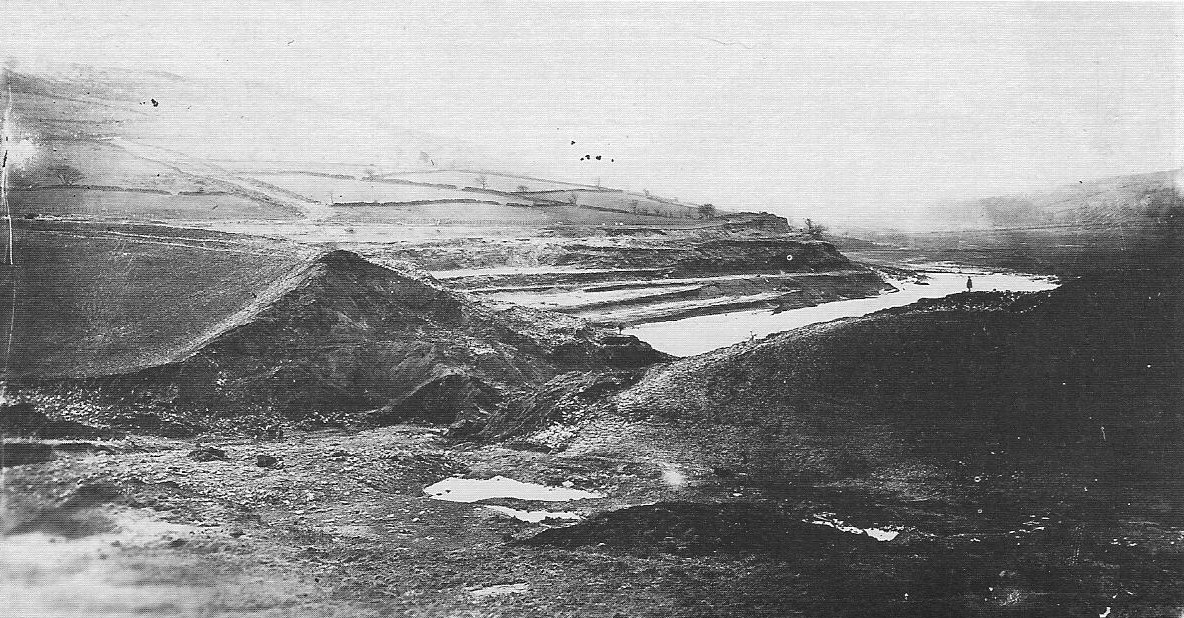
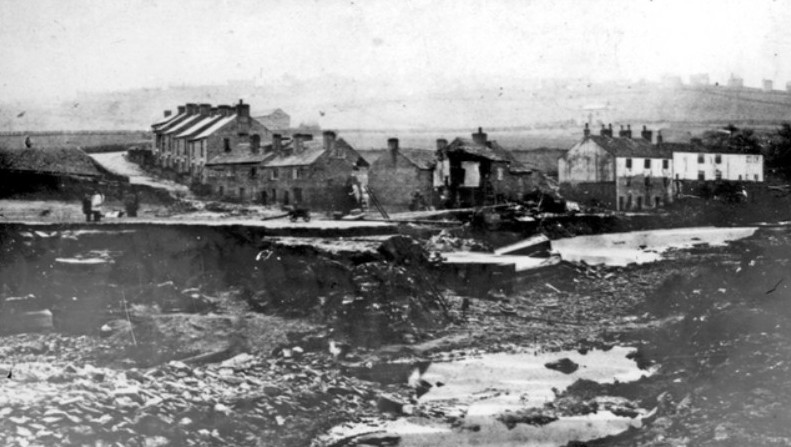
By 10 PM, when John Gunson returned to the structure, the downstream shoulder crack had grown to 0.25 inches (0.6 cm) wide and 20 feet (6.1 m) long. He and the dam crew opened the discharge pipes, but an hour later, the reservoir had risen to within 3 inches (7.6 cm) of the crest and gale-force winds were blowing spray over the dam. Even worse, the crack had reached a maximum width of 1 inch (2.5 cm). Gunson and his crews made a last-ditch effort to expand the emergency spillway using black powder, but the charges were too damp to detonate. Finally, at 11:30 PM, the Dale Dyke Dam failed. Eyewitnesses recalled that the initial breach, roughly 90 feet (27 m) wide, was almost immediately followed by an abrupt, violent final breach. Water surged through the resulting trapezoidal hole in the dam, which was later measured at 80 feet (24 m) deep, 300 feet (91 m) wide at the crest, and 60 feet (18 m) wide at its base. Ironically, seconds after the dam breached, Gunson’s emergency explosives finally detonated [1, 2].
The reservoir’s onrushing waters raced down the Dale Dyke valley at speeds of up to 18 miles per hour (30 km/h). The wave was so powerful that it scoured bedrock from beneath building foundations and jammed large tree trunks into boulder outcrops lying 40 feet (12 m) above the River Loxley’s usual level. Towns just downstream of the dam, where the valleys were narrowest, were inundated with 10 to 27 feet (3.0 to 8.2 m) of water. By contrast, Sheffield, lying in the broader valley of the River Don, had a maximum flood depth of 9 feet (2.7 m). Wherever one lived in the region, the flood was terrifying. “It seemed,” one survivor recalled, “as if some unheard-of monster were rushing down the valley, lashing the hillsides with his scaly folds, crunching up buildings between his jaws and filling the air with his wrathful hiss” [1, 5, 6, 9].

Many locals near the dam had caught wind of the worsening situation and were still awake when the flood wave arrived. Regardless, survival still usually came down to dumb luck or a desperate idea. A tailor survived by climbing into a wooden box, pulling the lid down, and floating out of the flood in his home. A file cutter literally broke through his wall to escape the deluge. Far too many others were not so fortunate, and the disaster’s official death count came to 240 people, ranging in age from two days to 87 years. More recent scholarship [BJ2.1][MB2.2]suggests that the toll was more likely between 250 and 300 victims, and this figure excludes confirmed but indirect casualties from flood-related injury or illness. Most survivors suffered the loss of a loved one or friend, and almost everyone was hurt economically. The wave destroyed 800 homes, hundreds of factories and businesses, and too much livestock to count. Large areas of Sheffield had been mired in Dickensian poverty even before the breach, and the tragedy thus hit them especially hard. While [WMJ3.1][MB3.2]the disaster had limited impact on the town’s astonishing long-term economic growth, it nevertheless inflicted considerable short-term pain on many in the Sheffield area [1, 5, 9, 12].
Britons of every city and social class, including Queen Victoria, stepped in to contribute to relief efforts for the Dale Dyke Dam failure. These charitable efforts proved invaluable in alleviating flood damage, which wound up totaling £455,000 at the time, or $67M in 2026 USD. Even as the flooding abated, though, public outcry began building, and civil engineers swiftly started investigating what had happened. Within two weeks, the government’s chief regional engineer and a deputy visited the dam ruins, compiled their observations, and presented their findings at a contentious coroner’s inquest. Also present at the inquest were Towlerton Leather and John Gunson, both of whom were castigated for their hands-off approach to the dam’s design and construction. Gunson in particular was upbraided for using 5-foot (1.5-m) lifts of gravel in the shoulders instead of the 3-foot (0.9-m) lifts Leather had specified, and the regional press criticized him mercilessly. The coroner’s jury was equally harsh; “in our opinion,” the members noted, “there has not been that engineering skill and attention in the construction of the works which their magnitude and importance demanded” [1, 2, 6, 7, 11].
The consensus that the Dale Dyke Dam had been poorly engineered did not extend to what exactly had been done incorrectly. The government’s engineers traced the failure back to the discharge pipes, which they surmised had settled significantly due to the relatively soft puddled clay beneath them and the dam’s massive weight. Eventually, the engineers theorized, the pipes or their lead seals had broken, and water had begun leaking through the surrounding puddled clay. Simultaneously, the dam had settled with the pipes, gradually lowering its crest. The problem had been exacerbated by the dumping of shoulder gravel, which had led to aggregate segregation and left the shoulders, in the lead government engineer’s words, as “porous as a sieve.” He recommended that discharge pipes for future dams be placed within a culvert or tunnel to permit their ready inspection and maintenance. “Whatever happened to [the pipes],” he concluded, “they were out of the control of the engineer” [1, 2, 8].
Meanwhile, Sheffield’s water supply system had retained outside civil engineers of their own to contest the government’s perspective. These engineers had the Sheffield water system conduct pressure head tests of the pipes, which the flood had not carried away. These tests revealed no leakage. Moreover, while the engineers acknowledged that parts of the puddled clay core had failed, they noted that surviving sections of the core showed no signs of internal erosion. Nor had eyewitnesses observed signs of piping, such as turbid discharge, from the pipes just prior to the breach. Yet while the engineers concluded that the construction of the discharge pipes had not caused the breach, they were puzzled as to what other mechanism could have led to the failure. They eventually identified as the cause an adjacent paleo-landslide that showed signs of recent activity, less due to confidence in this hypothesis than to a lack of a more credible alternative. The government engineers scorned this theory but never addressed the gaps in their own argument, and for over a century the forensic deadlock persisted [1, 2].[BJ4.1][MB4.2]
While the debate played out, British engineers quietly reimpounded the Dale Dyke Reservoir. The new dam was built about 900 feet (275 m) upstream of where its predecessor had stood and was slightly smaller, measuring 900 feet (275 m) long and 80 feet (24 m) high and impounding a reservoir of 1,500 acre-feet (1,850,000 m3). Unlike the original, the new dam’s outlet pipes were built through a rock tunnel to enable easy inspection and maintenance, and its 130-foot (40-m) emergency spillway was twice as long as that of its forebear. The second Dale Dyke Dam was completed in 1875. The disaster also spurred changes in dam engineering more broadly. By the 1870s, British civil engineers whose dams incorporated core walls of variable depth were using gradual inclines in the bottoms of their cutoff trenches rather than abrupt steps. Other changes took longer to come to fruition. The coroner’s jury urged mandatory government inspections for dams, but the government engineers recommended against this, declaring that “any approval of plans or casual inspection of waterworks embankments cannot ensure ultimate safety in such works.” Not until the 1920s and several deadly, albeit smaller-scale, dam failures did the public and Parliament come to disagree with the engineers’ verdict that “the engineer and persons immediately connected with the works” should bear sole responsibility for their upkeep and inspection[BJ5.1][MB5.2] [1, 2, 6, 10].

The UK’s passage of its first dam inspection laws coincided with early work in soil mechanics, and the subsequent half-century of advances in geotechnics ultimately helped solve how the Dale Dyke Dam had failed. In the late 1970s, dam geotechnical engineer Geoffrey Binnie realized that the dumping of gravel for the dam’s shoulders, and the lack of grain size-zoned vertical layers within them, had led to excessive settlement of the gravel relative to the clay core. The settling gravel had caused arching and, ultimately, cracking within the core, which differential settlement due to the core’s abrupt changes in depth had worsened. Binnie also connected the high permeability of the shoulders to a higher head loss and, therefore, hydraulic gradient across the core. Eventually, he concluded, the combination of these factors had resulted in a vicious cycle of hydraulic fracturing within the core. Over time, this had led to piping through these cracks, which had caused both the depressions seen in the upstream shoulder in early 1864 and the longitudinal crack seen along the dam’s downstream face just before the breach. Finally, after the failure, the paleo-landslide had been briefly reactivated by rapid drawdown in the saturated clay. Binnie’s theory, based on these mechanisms, which were unknown to the rival teams of Victorian engineers, validated the strong points of both groups’ hypotheses while avoiding their pitfalls. His work won immediate acclaim and is now widely accepted as the explanation for the breach of the dam [2, 3].
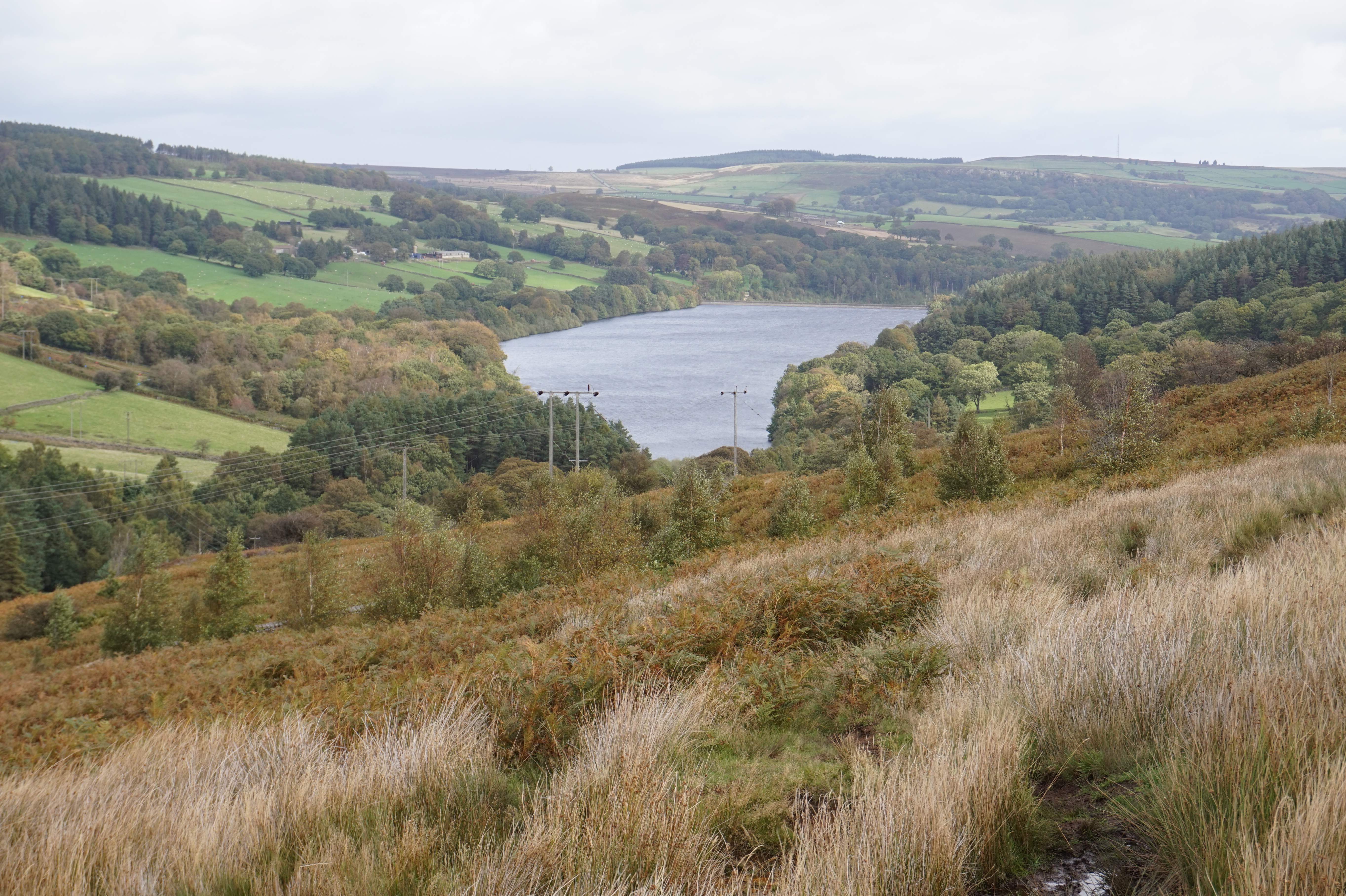
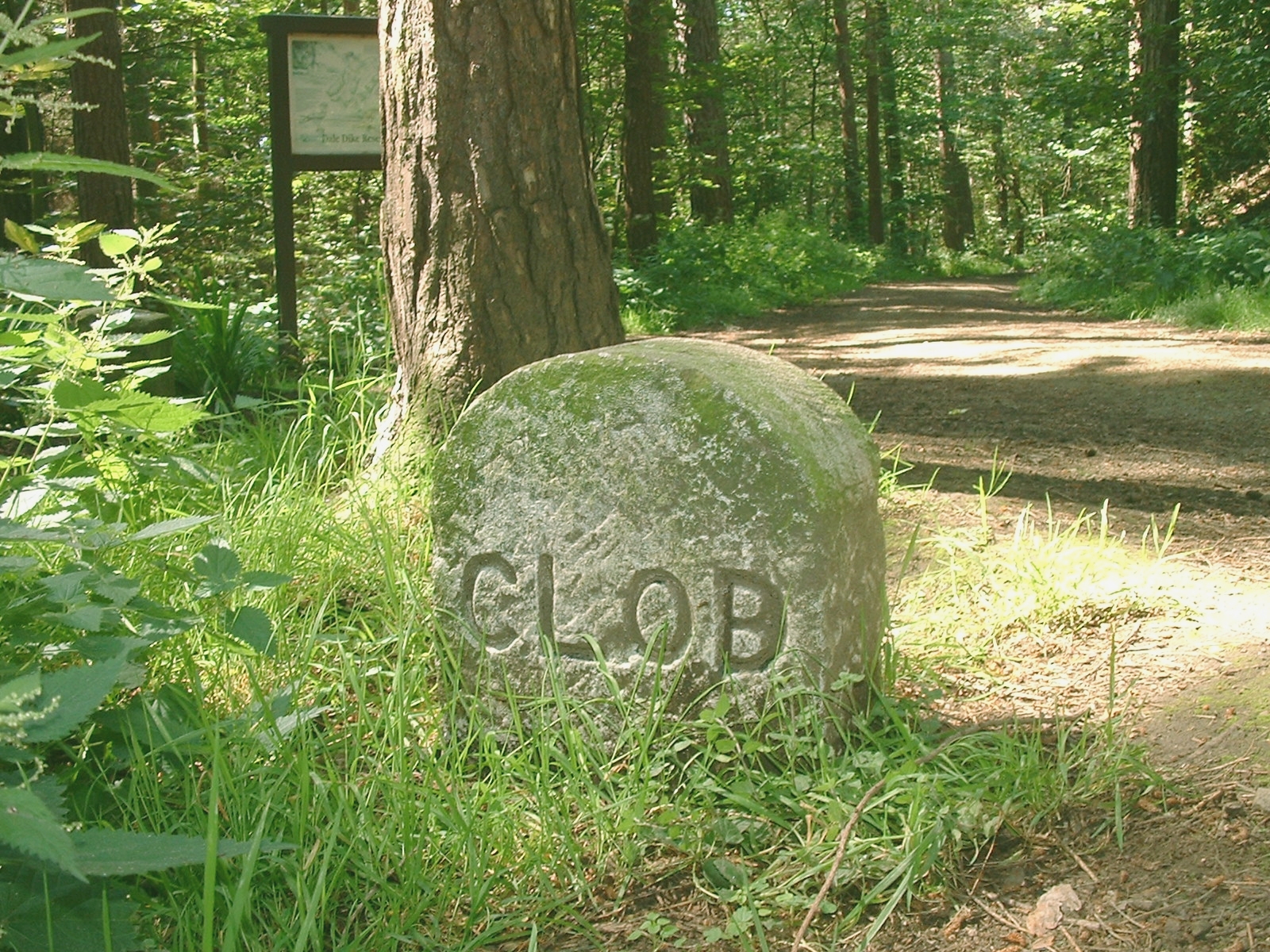
Today, the Dale Dyke Dam’s former location blends in with the English countryside. Its successor has functioned without serious incident since its completion in 1875. The Dale Dyke Reservoir continues to serve both Greater Sheffield and the many outdoor enthusiasts who visit it to hike and observe nature. Still, the site bears reminders of its solemn history. Plaques commemorate the 1864 breach’s victims, and short stone markers on either side of the Dale Dyke valley are marked “C.L.O.B.” – “Center Line of Old Bank [Embankment].” These unobtrusive monuments drive home the lessons of the Dale Dyke Dam breach far more simply and eloquently than any elaborate memorial could. They remind dam professionals everywhere of what has aptly been described as their “considerable social responsibility” to prevent “perhaps the most serious man-made catastrophe likely to occur in peacetime” [1, 9].
References:
(1) Amey, G. (1974). The collapse of the Dale Dyke Dam, 1864. Cassell & Co.
(9) Smith, N. (1972). A history of dams. The Citadel Press.
(12) Wright, O. (2014, March 11). The forgotten flood: Sheffield’s tragic past remembered. BBC News.
This case study was peer-reviewed by Bill Johnstone, Ph.D., P.E. (Spatial Vision Consulting, North Vancouver, BC) and Tom MacDougall, P.E. (RJH Consultants, Englewood, CO).

Lessons Learned
Dam incidents and failures can fundamentally be attributed to human factors.
Learn more
Dams should be thoroughly assessed for risk using a periodic risk review process including a site inspection, review of original design/construction/performance, and analysis of potential failure modes and consequences of failure.
Learn more
Downstream flooding can be caused by spillway flows that exceed channel capacity or as a result of reservoir misoperation.
Learn more
Earth and rockfill embankment dams must be stable under the full range of anticipated loading conditions.
Learn more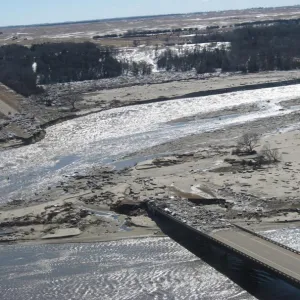
Forensic investigations are needed for major dam failures and incidents in order to determine the history of the contributing physical and human factors, and the culminating physical failure modes and mechanisms.
Learn more
High and significant hazard dams should be designed to pass an appropriate design flood. Dams constructed prior to the availability of extreme rainfall data should be assessed to make sure they have adequate spillway capacity.
Learn more
High and significant hazard embankment dams should have internal filter and seepage collection systems.
Learn more
The Study of Past Dam Failures and Incidents is Essential for Keeping Today’s Dams Safe.
Learn more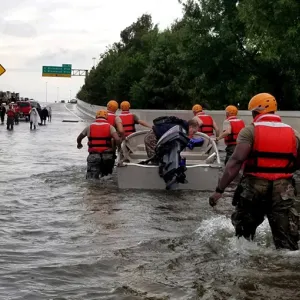
Timely warning and rapid public response are critical to saving lives during a dam emergency.
Learn more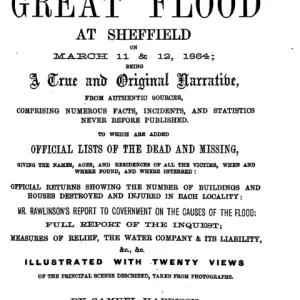
A Complete History of the Great Flood at Sheffield on March 11 & 12, 1864
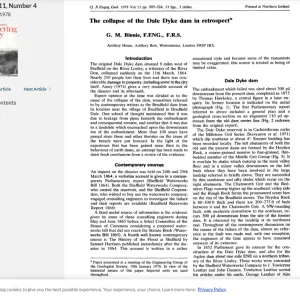
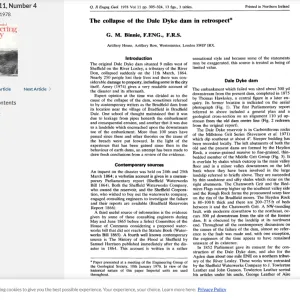
Discussion: The Collapse of the Dale Dyke Dam in Retrospect
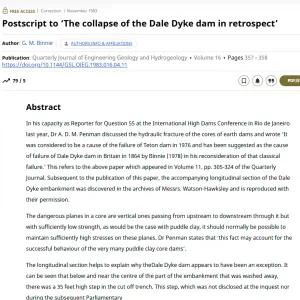
Not Available for Download:
(1) Amey, G. (1974). The collapse of the Dale Dyke Dam, 1864. Cassell & Co.